
A small-team pipeline is useful only when each open deal has an owner, evidence for its current stage, and one dated next action. Start with the operating workflow, then configure the CRM around the decisions the team must make.
Outcome and scope
The goal is shared visibility without turning the CRM into a second spreadsheet. Use a small set of stages for new-business opportunities and keep post-sale delivery in the system that owns delivery.
Workflow map
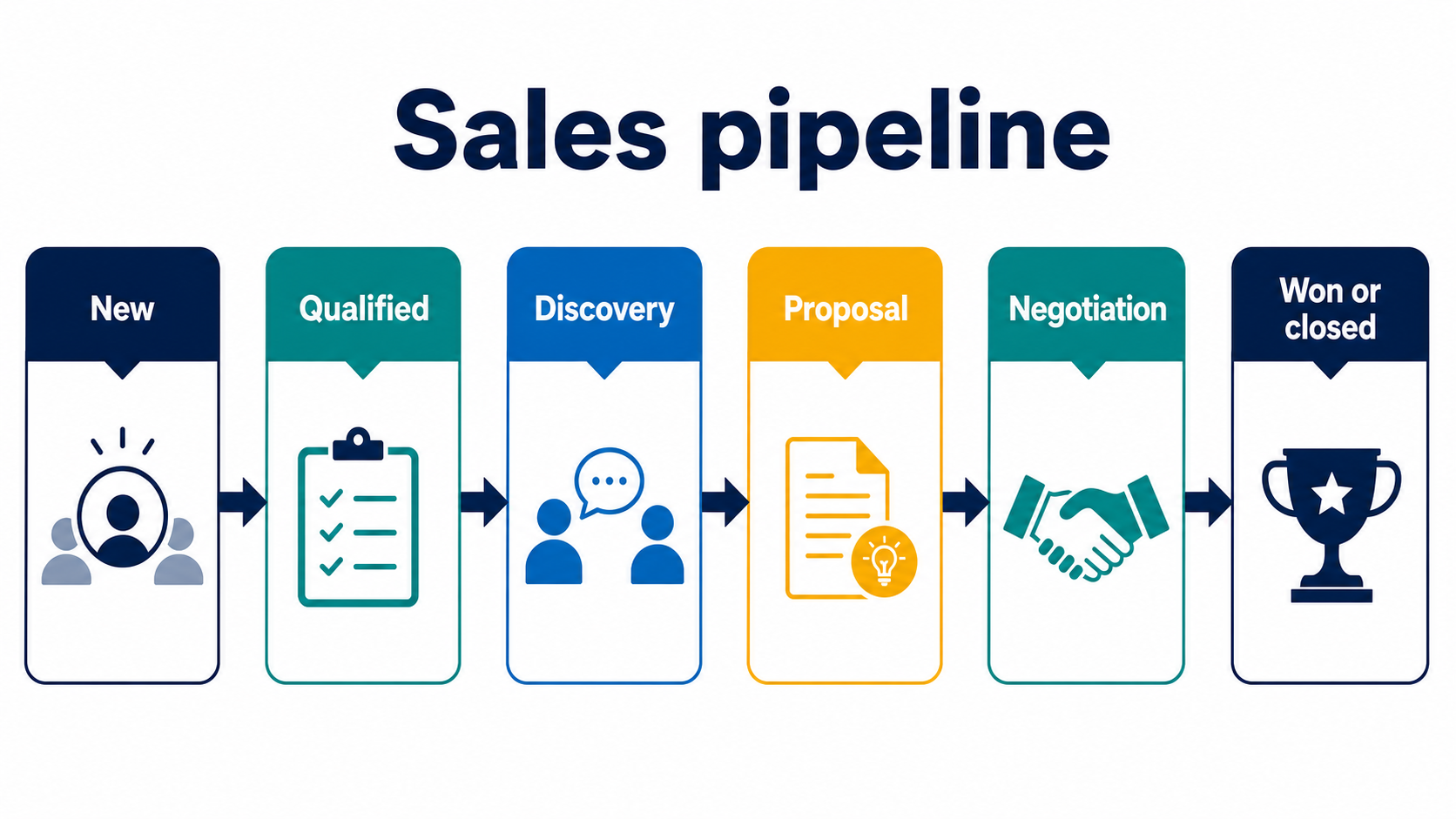
- Capture: record the source, company, contact, and reason for contact.
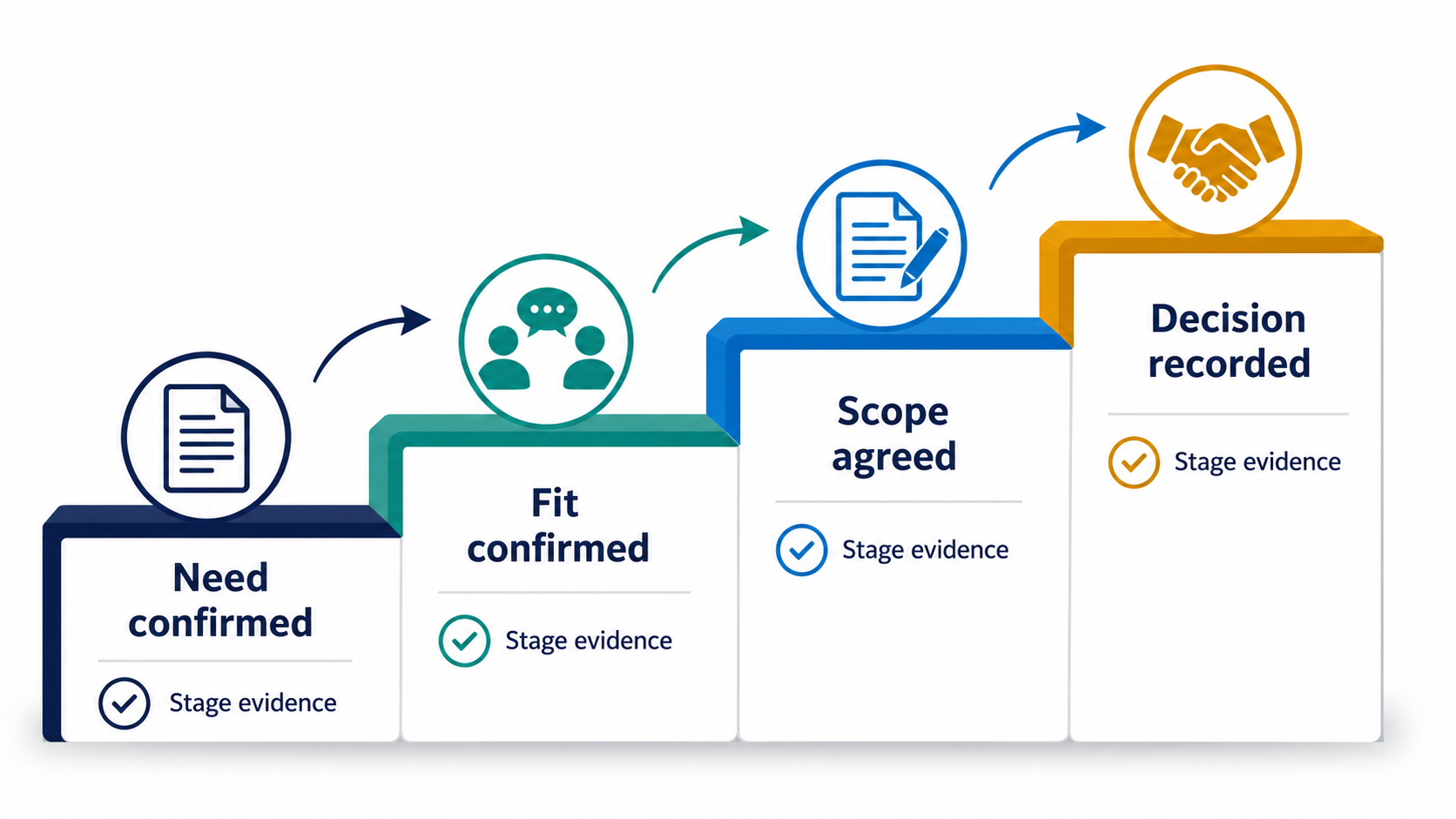
- Qualify: confirm problem, fit, timing, and decision process.
- Advance: move only when the next evidence exists.
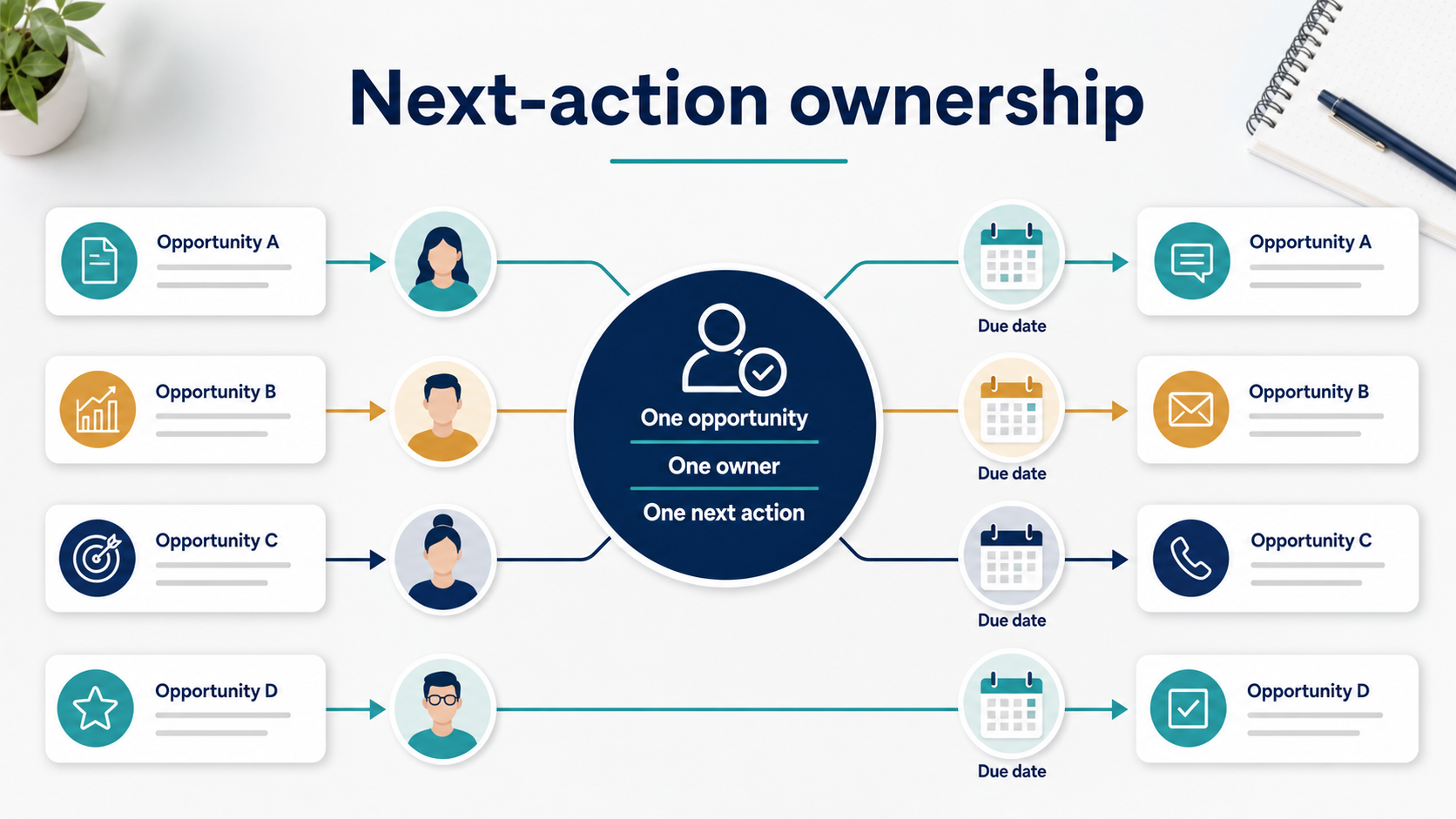
- Review: assign one owner, one action, and one due date.
- Close: record won, lost, delayed, or no-decision with a factual reason.
Example fields and stage criteria
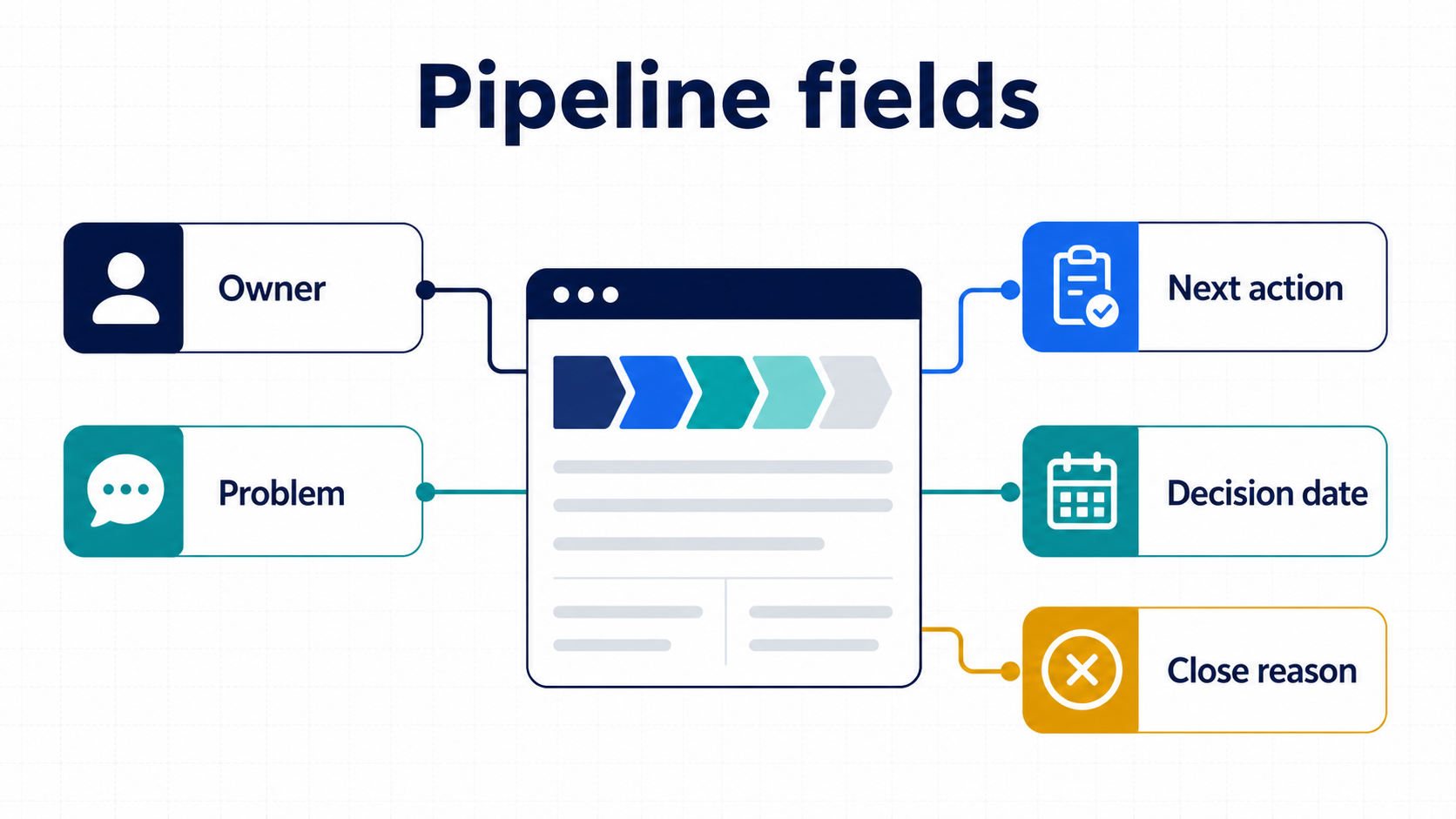
| Field | Example | Review question |
|---|---|---|
| Owner | Named teammate | Is accountability unambiguous? |
| Current evidence | Last customer-facing action | Why is the deal in this stage? |
| Next action | Send scope draft by Friday | Can one person complete it? |
| Decision date | Date tied to a customer event | Is the date evidence-based? |
| Close reason | Won, budget, timing, fit, or no decision | Can the team learn from it? |
Setup steps
- Write entry and exit criteria in plain language.
- Create only fields that affect qualification, handoff, forecasting, or review.
- Make owner, last activity, next action, and due date visible in every view.
- Test reminders and stage rules with dummy deals before rollout.
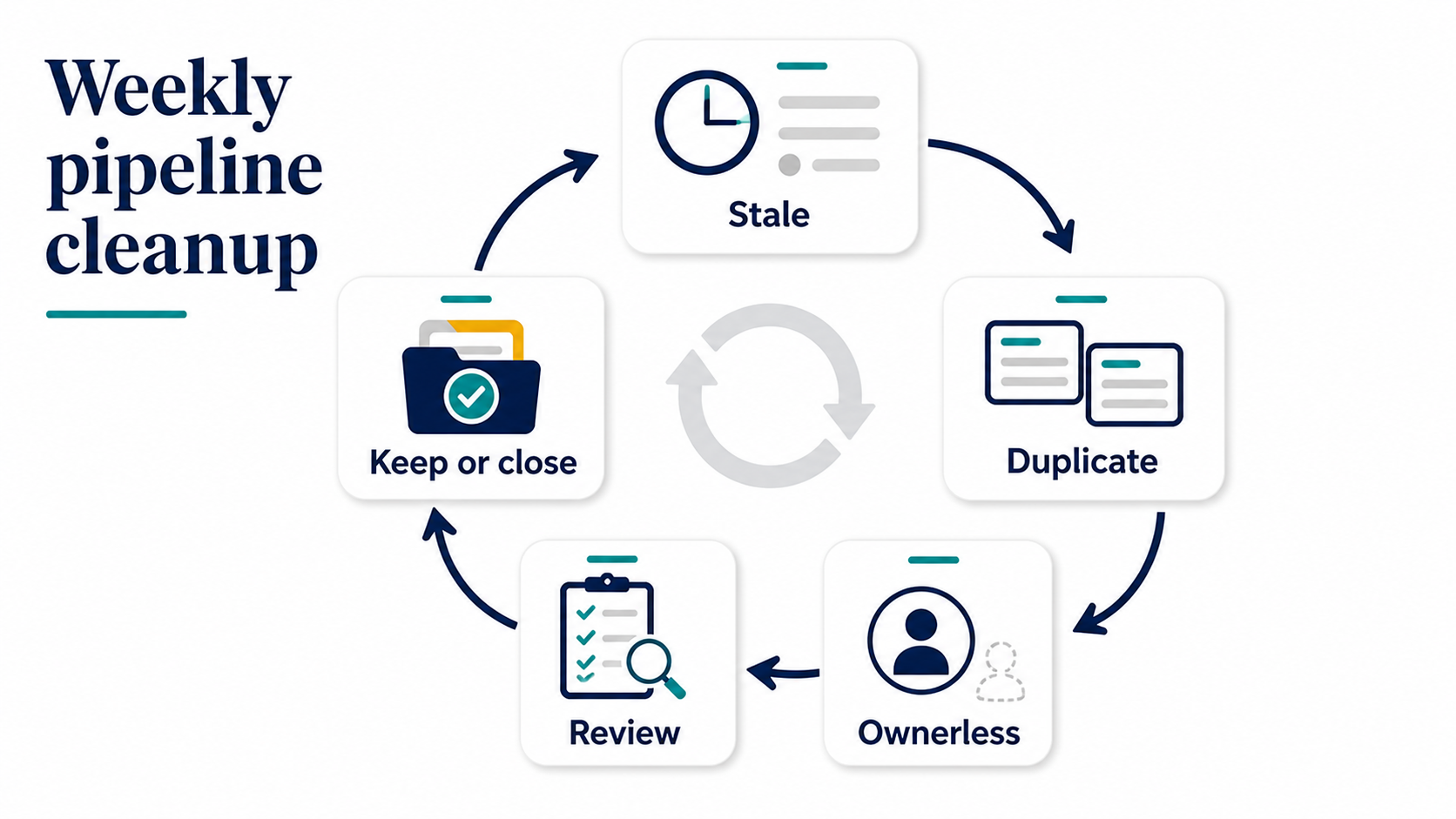
- Review stale, duplicated, or ownerless records each week.
For the next review routine, see our stale-deal cleanup workflow and weekly pipeline risk review.
Failure modes and metrics
- Too many stages hide the absence of a decision.
- Probability becomes a substitute for customer evidence.
- Activities are logged without an owner or due date.
- Closed-lost reasons are free text and cannot be reviewed.
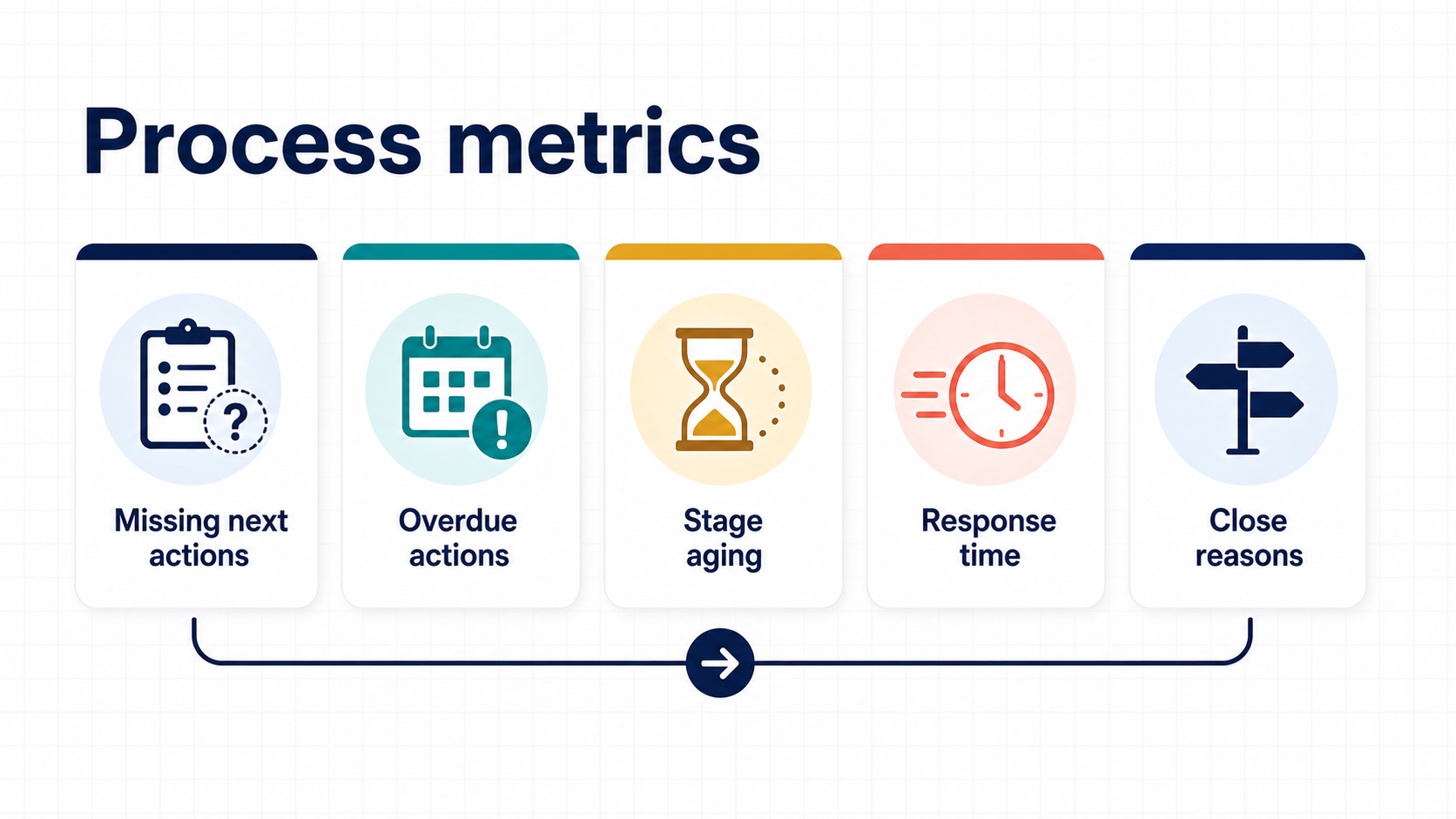
Review open deals without a next action, overdue actions, stage aging, response time, adjacent-stage movement, and close reasons. These are process measures, not revenue guarantees.
FAQ
How many stages should a small team use?
Use the fewest stages that represent different decisions. Combine stages that require the same evidence and action.
Should every opportunity have a probability?
Only when the team has a defined method for setting and reviewing it. Otherwise the number creates false precision.
When should a deal be closed?
Close it when the agreed window ends or the customer explicitly ends the process, and keep the reason.
Sources
Leave a Reply